
Would You Wrap Your BodyIn Cling Film?
Your skin protects you from the outside world, your clothing provides another layer of protection, and your home does the same for you. Just like choosing the right clothing helps keep you comfortable, the materials used in your home play an important role in keeping it warm, dry, and healthy.
On a cold, wet morning on Waiheke Island, selecting an outerwear layer illustrates this principle clearly. A merino wool sweater beneath a breathable jacket provides comfort, whereas a plastic poncho quickly leads to sweat and dampness. While both keep rainwater out, plastic traps body heat and moisture against the skin because the vapour cannot escape.
Your home has a protective outer layer called the building envelope. This includes the walls, roof, windows, doors, insulation, and other materials that separate the inside of your home from the outside environment. Like clothing protects your body, the building envelope helps control heat, air, and moisture. When the wrong materials are used or moisture cannot escape, it can become trapped inside your walls and lead to problems over time.
Your Home Is Your Third Skin
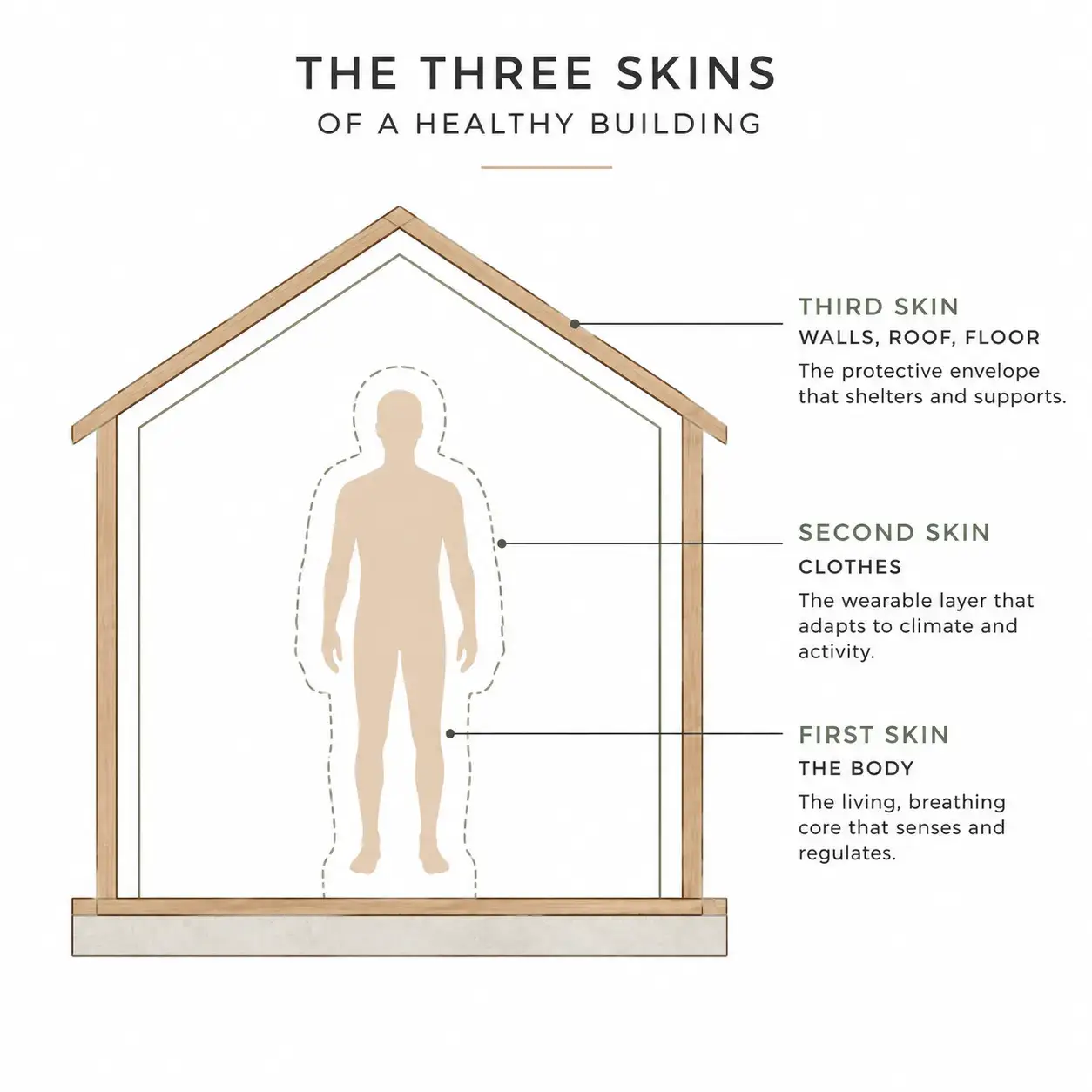
The field of building biology, which originated in Germany during the 1960s and 1970s under founders like Anton Schneider, frames a house as the third human skin (Institut für Baubiologie + Nachhaltigkeit).
This concept breaks down into three clear layers:
- First skin: the natural human body
- Second skin: clothing
- Third skin: the surrounding walls, roof, and flooring
Each layer sits between you and the outdoor weather, providing protection from the elements.
Data from the US Environmental Protection Agency indicates that people spend roughly 90 percent of their lives indoors, where pollutant levels often range two to five times higher than outdoor environments. Since families spend most of their time inside this third skin, selecting healthy, breathable building materials remains essential.
Your House As Your Third Skin, And Why It Matters
Viewing a house as a third skin highlights the importance of dynamic moisture control. Human skin regulates temperature and releases humidity to prevent overheating, and natural clothing fibres like sheep's wool function similarly by breathing and releasing trapped moisture.
High-performance homes must function as active regulators that manage moisture movement in two distinct directions:
- External protection: Keeping wind-driven coastal rain, heavy moisture, and salt air out of the structure.
- Internal release: Allowing moisture generated from daily activities such as cooking, showering, laundry, and breathing to escape safely.
Research from BRANZ demonstrates that a family of four generates between 10 and 15 litres of moisture every single day inside their home. When a building envelope cannot release this internal humidity, the trapped moisture collects on cold surfaces behind plasterboard, creating ideal conditions for hidden dampness and mould growth.
Building a home as a functional third skin involves specifying breathable building envelopes alongside natural insulation materials like sheep's wool and hempcrete. This allows the structure to regulate indoor humidity naturally, protecting air quality and building durability over time.
"Breathable" Does Not Mean Draughty
In building science, a breathable wall does not mean an unsealed or draughty structure. Air leakage leads to heat loss and higher energy bills, whereas true breathability refers strictly to vapour permeability, allowing moisture vapour to migrate through layers while blocking liquid water and air infiltration.
To illustrate, a wet bath towel hanging on a clothesline dries quickly, whereas the same towel sealed inside a plastic bag remains damp and deteriorates over time. The towel itself remains unchanged, but its environment controls its ability to dry.
Every wall assembly in New Zealand experiences moisture at some point due to atmospheric conditions. A two-year BRANZ study evaluating wall assemblies in humidified buildings showed that relative humidity at the underlay layer reached 100 percent across nearly all tested walls (BRANZ Study Report SR344).
What Goes Wrong When A Wall Cannot Dry
When moisture becomes trapped inside wall assemblies without a path to dry, a clear chain of events occurs:
- Moisture settles on cool internal framing or surfaces.
- The trapped humidity creates an environment where dust, timber, and paper feed fungal growth.
- Mould develops in concealed cavities behind linings.
- Spores distribute into the living space, compromising indoor air quality.
The World Health Organization evaluated global evidence on indoor dampness and mould, identifying direct links to increased respiratory symptoms, allergies, and asthma. The primary recommendation focuses on prevention by keeping persistent dampness out of building assemblies.
This issue remains widespread across New Zealand, where the BRANZ House Condition Survey identified visible mould in 49 percent of surveyed properties in 2015. In many cases, homeowners remain unaware because fungal growth can develop behind wardrobes, cabinetry, or wall linings where it cannot be easily seen. Hidden mould may not always produce a noticeable smell, but it can quietly compromise indoor air quality and impact the health and wellbeing of you and your family over time.
Research by Sterling and colleagues (1985) mapped occupant health risks across indoor humidity scales, showing that dust mites, mould, bacteria, and off-gassing chemicals sit at their lowest activity points when relative humidity remains between 40 and 60 percent. When humidity rises above this threshold, health and structural risks increase rapidly.
On Waiheke Island, high ambient coastal humidity, thick bush canopy, and shaded building sites create challenging conditions. Designing a third skin that cannot dry properly introduces long-term performance risks to the home.
Your Home May Look Perfect, But What's Happening Behind The Walls?
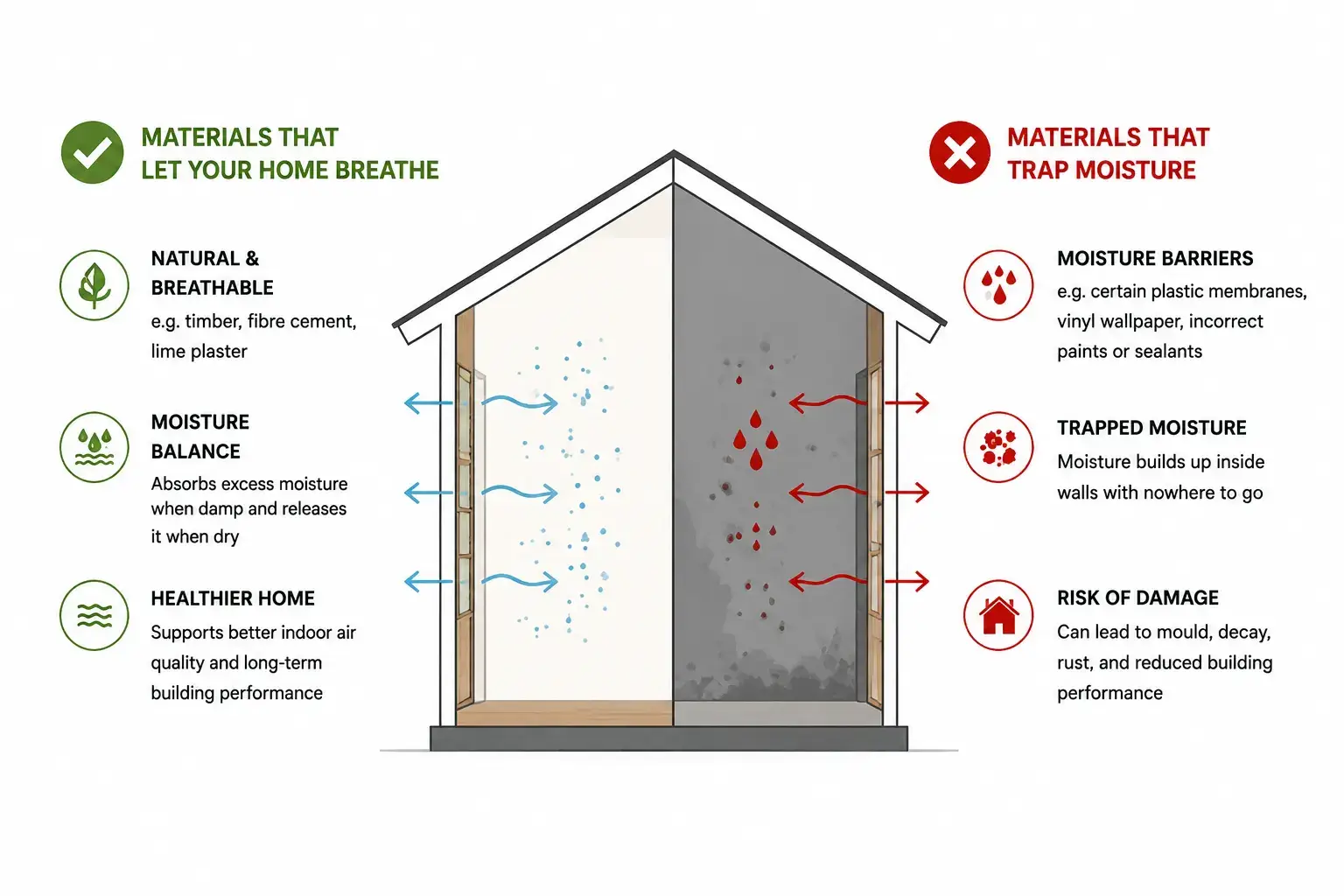
The materials used in your home play an important role in managing moisture. Some materials can naturally absorb excess moisture when conditions are damp and release it again when the air becomes drier. This helps your home regulate humidity and allows walls to dry properly over time.
Other materials can prevent moisture from moving through the structure. When moisture becomes trapped inside walls with nowhere to escape, it can lead to problems such as mould, decay, and reduced building performance.
This is why choosing the right materials and construction methods matters. While the New Zealand Building Code sets the minimum standard, experienced builders understand how different materials work together to create homes that can better manage moisture and maintain a healthier indoor environment.
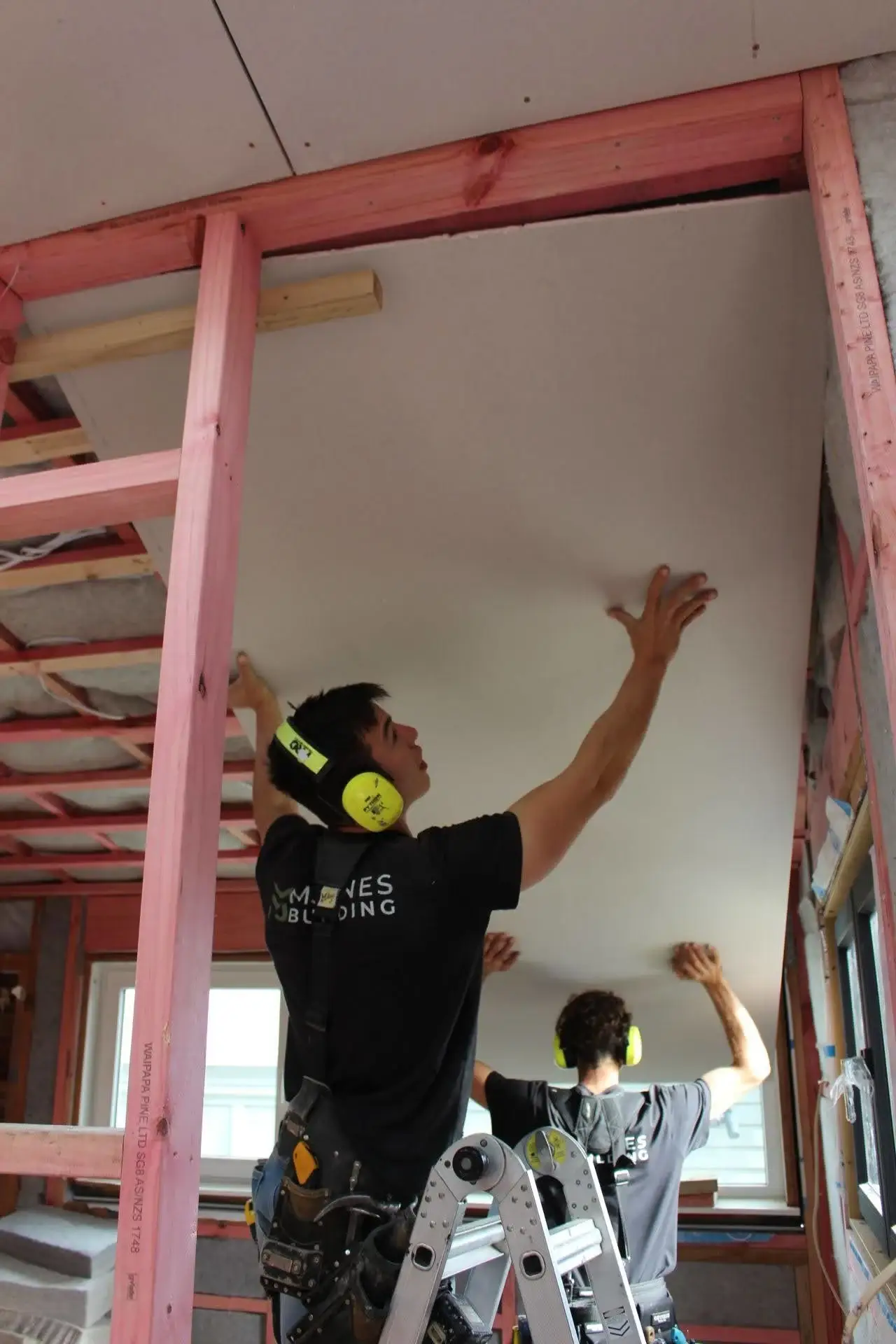
Where Your Renovation Budget Actually Matters
When planning a home renovation, budget discussions frequently concentrate on visible interior finishes, including tiles, hardware, tapware, and kitchen cabinetry.
While aesthetic finishes contribute to the enjoyment of a home, investment allocated behind wall linings often has a far greater impact on long-term comfort, indoor air quality, and structural health.
While tapware, finishes, and fixtures can be updated over time, the construction behind your walls, floors, and ceilings is much harder and more expensive to revisit once the work is complete. Investing in the right building systems from the beginning helps create a home that remains healthier, more comfortable, and better performing for years to come.
Tips For Making Healthier Choices For Your Building Project
To ensure a healthy and durable building envelope, consider the following principles:
- Evaluate complete wall assemblies: Focus on how the cladding, cavity, wrap, insulation, framing, and lining perform together as an integrated system rather than isolated products.
- Prioritise drying capacity: Confirm that wall designs include mechanisms to dry out when moisture enters.
- Monitor indoor humidity: Use a digital hygrometer to track whether indoor relative humidity stays within the recommended 40 to 60 percent range.
- Address surface condensation: Streaming window condensation can indicate elevated indoor moisture levels, poor ventilation, or inadequate building envelope performance. Window selection also plays an important role, as thermally broken, high-performance windows can help reduce condensation by maintaining warmer interior surfaces and improving overall comfort.
- Match specification to usage: Tailor insulation, moisture management, and ventilation strategies to each room's function and exposure level, particularly in wet areas and kitchens where moisture levels are higher.
- Choose an experienced, licensed builder: Select a builder who understands building biology, moisture management, and healthy building practices to ensure your home is designed and constructed for long-term performance.
- Invest from the outside in: Prioritise investment in the building envelope and insulation before finalising interior decorative finishes.
Prioritising Long-Term Building Performance
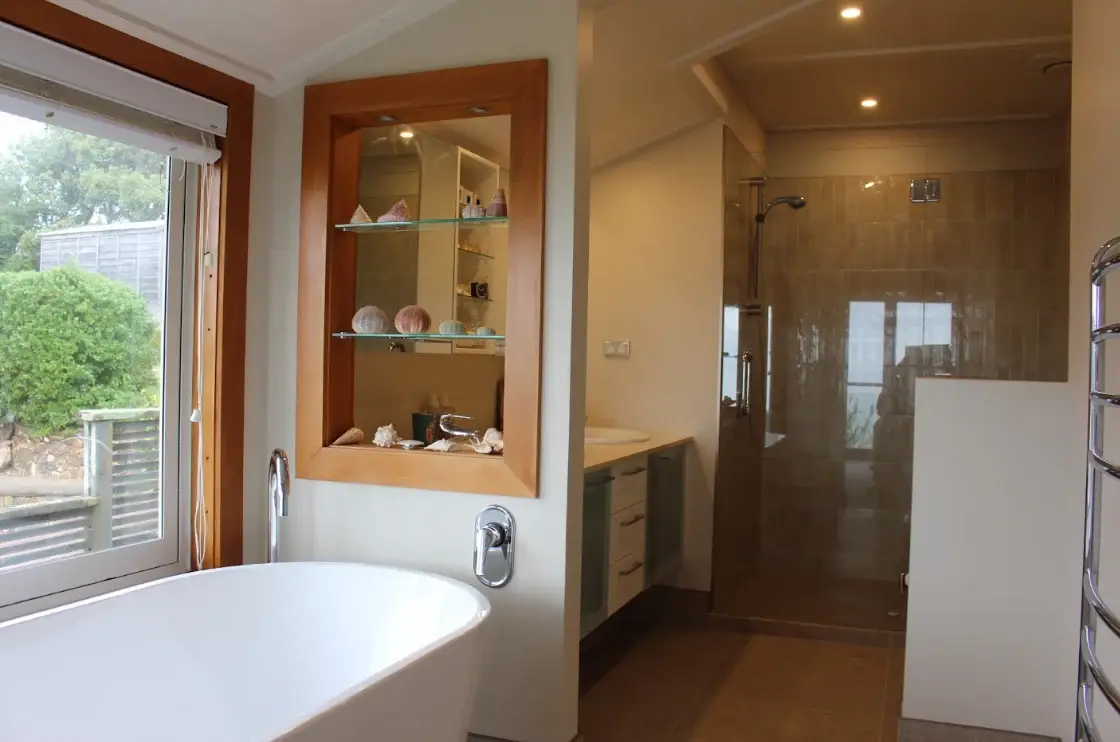
A self-regulating building envelope is a home structure designed to naturally manage moisture, temperature, and airflow, helping maintain a healthier and more comfortable indoor environment. Creating this type of high-performing building envelope requires detailed planning, quality materials, and careful execution during construction.
Investing in proper moisture management and breathable assemblies produces a resilient home that protects occupant health naturally, reducing maintenance demands and performance issues over time.
A Useful Place To Begin

Frequently Asked Questions
References
- BRANZ. (2015). House Condition Survey: Mould and dampness in New Zealand homes.
- BRANZ Bulletin 367 (Condensation) & BRANZ Study Report SR482 (Housing Condition and Occupant Wellbeing).
- BRANZ. (SR344). Vapour control in New Zealand walls. Study Report.
- BRANZ. Air barriers vs vapour barriers and condensation research. Build Magazine.
- Institut für Baubiologie + Nachhaltigkeit (IBN). Building biology and the third skin concept.
- Sterling, E. M., Arundel, A., & Sterling, T. D. (1985). Criteria for Human Exposure to Humidity in Occupied Buildings.
- US Environmental Protection Agency (EPA). Indoor Air Quality (IAQ) and time spent indoors.
- World Health Organization (WHO). (2009). WHO Guidelines for Indoor Air Quality: Dampness and Mould.