
Why Natural Materials Matter When Renovating Your Home
A Builder’s Perspective
I started in the construction industry when I was 16, working on large commercial sites in the city. At the time, I thought it would just be a short-term job. I even remember telling myself it was the one thing I didn’t want to do long term.
Fast forward just over a decade, and I now run my own building company on Waiheke Island. Along the way, my view of building changed. It became less about just putting materials together and more about how homes actually affect the people living in them.
Building is closely connected to health, comfort, and wellbeing. Our homes are where we sleep, raise families, and spend most of our time, so the materials we use really matter.
What Your Home Is Made Of Really Matters
Most modern homes are built using a mix of engineered and synthetic materials. Many of these materials release small amounts of gases into the air over time, commonly known as VOCs (volatile organic compounds).
These gases can come from:
- Paints and coatings
- Glues and adhesives
- Engineered timber and cabinetry
- Flooring and some benchtops
Good ventilation helps manage this, but the materials themselves still influence indoor air quality, especially in new or recently renovated homes.
Did you know?
Indoor air can contain higher levels of VOCs than outdoor air, particularly after renovations. Choosing low-VOC or natural materials can help reduce exposure from the start.
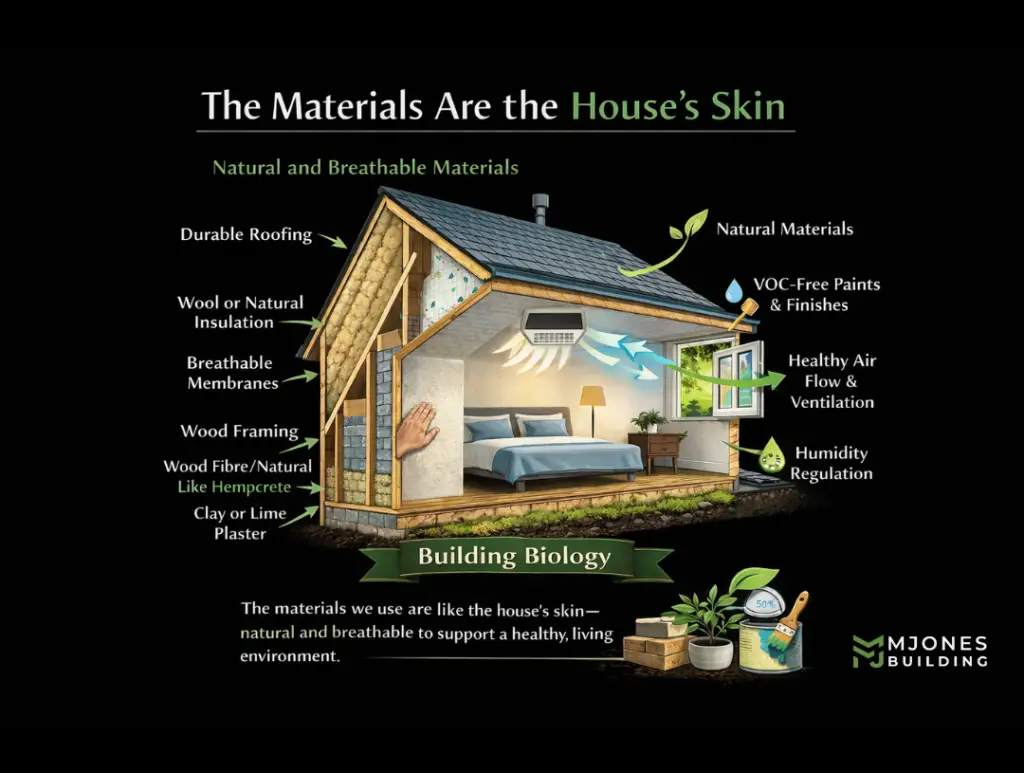
Natural materials such as untreated timber, stone, clay, lime, and mineral paints are generally low in VOCs and don’t off-gas in the same way as many synthetic products.
Durability: Built for the Long Term
There’s a common belief that modern materials always last longer. In reality, many natural materials have been used successfully for thousands of years.
Materials like timber, stone, lime, and clay have been used in buildings that are still standing today. What makes these materials durable isn’t just strength, but their ability to manage moisture, allow movement, and be repaired rather than replaced.
Did you know?
Lime-based materials can help manage moisture and, in some cases, naturally close small cracks over time, contributing to long service life.
For families renovating with the future in mind, durability means fewer issues, easier maintenance, and homes that age gracefully.
Indoor Air Quality and Breathable Homes
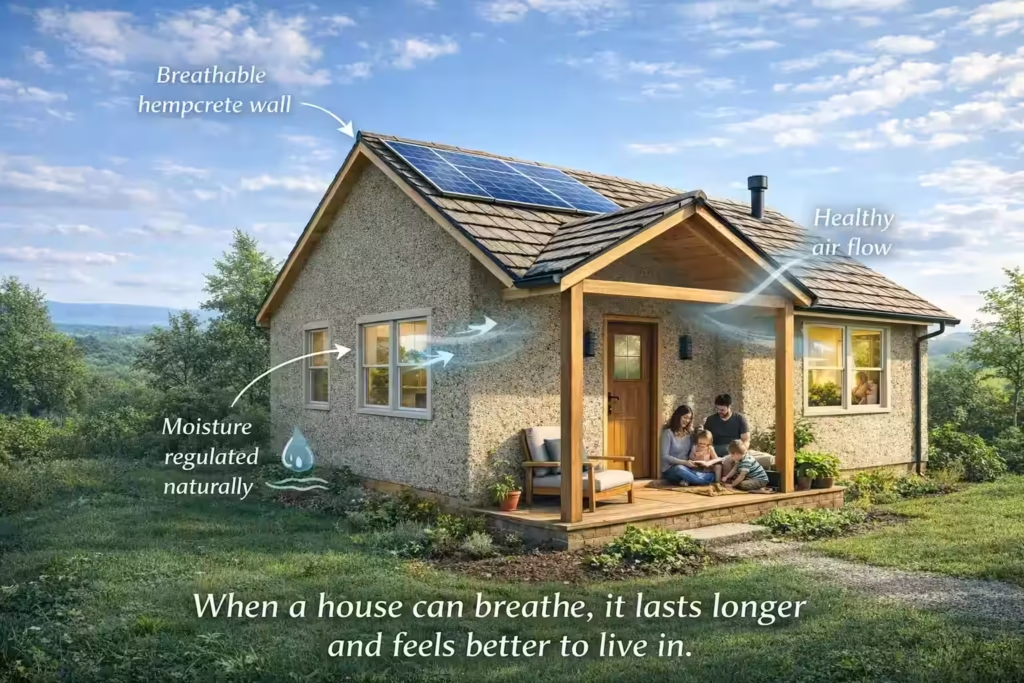
A healthy home isn’t just about being warm. It’s also about how air and moisture move through the building.
I recently completed hempcrete training in Taranaki, which deepened my understanding of breathable wall systems. Hempcrete is a natural infill material made from hemp hurd mixed with lime. While it isn’t structural, it helps regulate moisture and temperature within the building.
Did you know?
Breathable materials allow water vapour to move through walls, helping reduce condensation inside wall cavities when paired with good design and ventilation.
Materials like hempcrete are naturally low in toxins and, when detailed correctly, can be mould resistant and contribute to a more stable indoor environment.
Airtight Homes Need Balanced Design
“Our bodies need to breathe.
Our homes should too.”
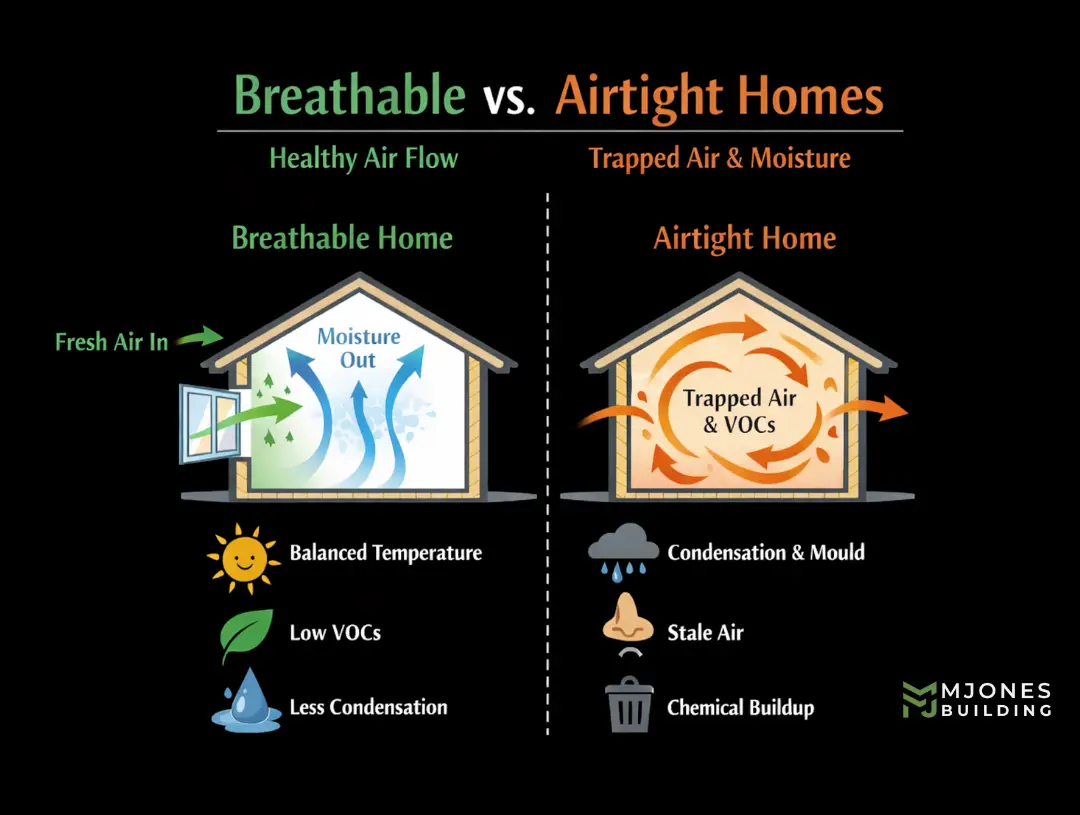
Modern homes are often designed to be airtight to improve energy efficiency. This helps keep homes warmer in winter and cooler in summer, which is a good thing when it’s done properly.
But airtightness on its own isn’t enough.
Just like our bodies, homes need balance. Fresh air needs a way in, stale air needs a way out, and moisture needs to be managed so it doesn’t build up inside walls and ceilings. If a home is tightly sealed without the right materials and ventilation strategy, moisture and indoor pollutants can become trapped over time.
Did you know?
An airtight home without good ventilation can have poorer indoor air quality than an older, draftier home.
This is why modern building design focuses on combining airtightness with controlled ventilation and thoughtful material selection. Natural and breathable materials don’t replace ventilation systems, but they can help create a more forgiving and balanced indoor environment when used alongside good design.
“When a house can breathe, it lasts longer and feels better to live in.”
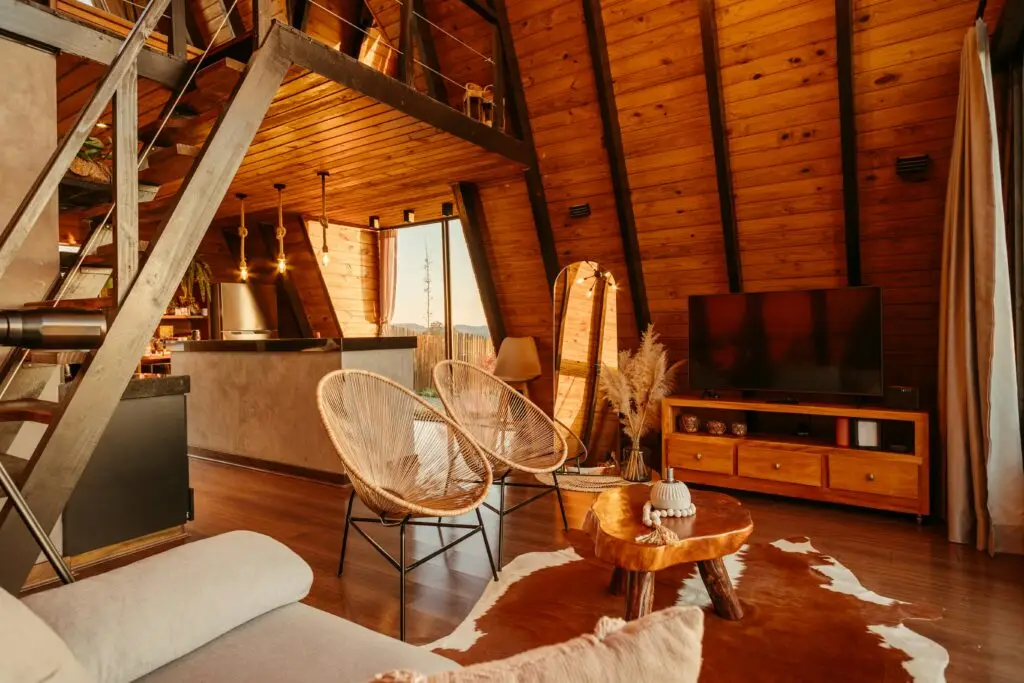
Your Home as a Living System
There’s a concept known as building biology, which looks at the relationship between people and the homes they live in. The idea is simple. Our homes act as an extension of us.
A healthy home should:
- Bring in natural light
- Maintain comfortable, even temperatures
- Manage moisture effectively
- Support clean indoor air
Did you know?
Access to natural light can improve comfort and support healthy sleep patterns, especially in family homes.
Using materials like timber, stone, clay-based finishes, and mineral paints is a practical way to support these goals, alongside good layout and design.
What This Means for Your Renovation
Choosing natural materials doesn’t mean compromising on modern comfort. It’s about making informed, thoughtful decisions.
For families and first-home buyers, this can look like:
- Choosing low-VOC or mineral paints
- Using solid timber where practical
- Improving ventilation and moisture control
- Designing spaces to maximise sunlight
- Selecting materials that age well over time
Did you know?
Moisture-related issues are one of the most common causes of long-term damage in homes and can be costly to fix later.
Good decisions early on can help avoid problems down the track.
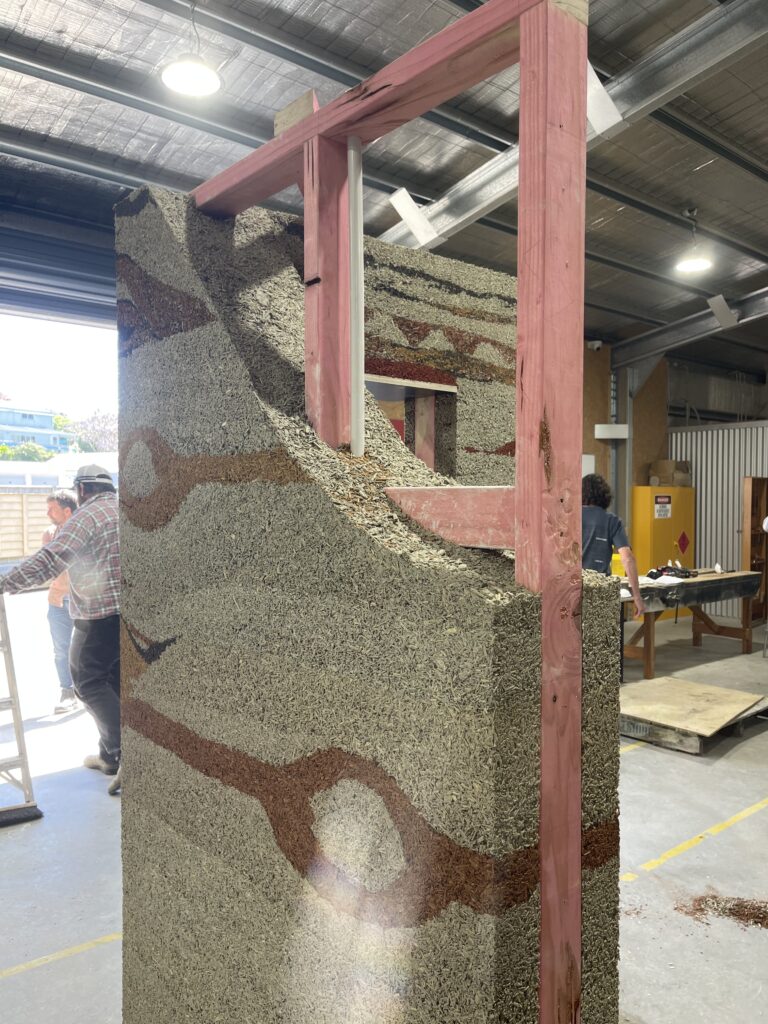
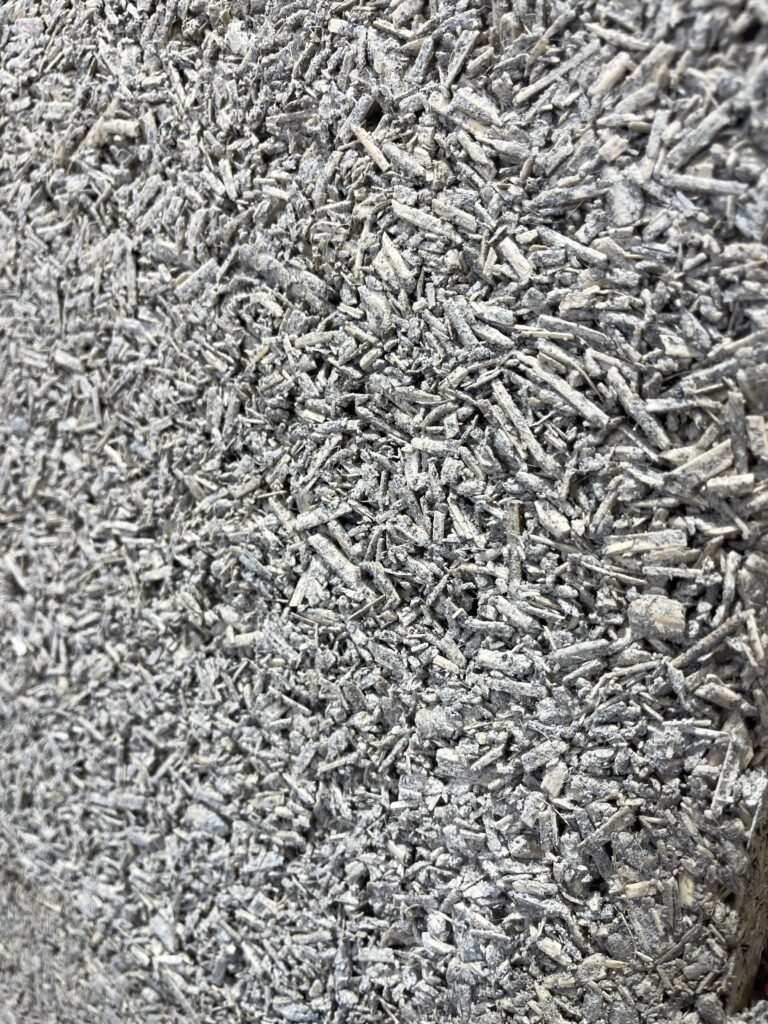
These images show hempcrete from raw hemp shiv/hurd through to a finished wall built around timber framing. Hempcrete is a natural, breathable material that helps regulate moisture and temperature while improving indoor air quality. Because it allows the building to breathe, it reduces the risk of damp, mould, and stale air. For families, this means a healthier, more comfortable home that performs naturally over time, not one that relies on machines to fix hidden problems.
Looking Forward
As families, we’re becoming more aware of how lifestyle choices affect health. Our homes should be part of that conversation.
Natural materials aren’t about extremes or going backwards. They’re about balance, durability, and creating homes that feel good to live in. When combined with good design and proper ventilation, they can help create warm, comfortable, and healthy spaces for families now and into the future.