More Than Looks:Why Building for Performance Matters in Your Next Project
Your home isn't just a building. It's where you rest, breathe, grow and make memories. A renovation should support your wellbeing, not just update surfaces. Many renovations focus on the visual upgrade — the fancy tapware, the statement tiles, the fresh paint. But if what's behind the walls isn't doing its job properly, your home could still feel cold, damp and uncomfortable. On Waiheke and across Auckland, where homes face a unique mix of salt air, humidity and weather extremes, performance is a big deal.
What "Performance" Actually Means in a Home
A high-performing home is about how well the home supports your wellbeing. It's not just about looking good — it's about how your home feels to live in every single day, across every season.
A high-performing home should be:
Warmer in winter
Cooler in summer
Healthier and drier year-round
Cheaper to run
Key systems that drive performance include thermal performance, airflow and ventilation, moisture control, energy efficiency, and durability and longevity. When these systems work together, you notice consistent comfort, less mould and condensation, better sleep and breathing, and lower energy bills.
Signs Your Home Isn't Performing Well
Performance problems aren't always obvious — but your body and your home will tell you. If any of these sound familiar, your home may not be working as hard as it should:
One room is always cold or damp
Musty smells in wardrobes or corners
Condensation or mould in bathrooms
Kids waking up blocked or wheezy
Heaters and dehumidifiers running non-stop
Healthy Home Insight 💡
If your windows fog up in the morning, that's a sign moisture is getting trapped inside instead of venting out. Your home shouldn't make you feel unwell.
Why a Renovation Is the Perfect Time to Upgrade Performance
When walls are open — that's your golden moment. It becomes easier and more affordable to address the systems that actually make your home comfortable to live in.
A well-performing home starts with the right systems — ventilation, insulation and moisture control working in harmony.
With walls open during a renovation you can add insulation properly (not just squeeze it in), install or improve mechanical ventilation systems, seal the building envelope to stop drafts and moisture leaks, upgrade joinery and glazing, and choose low-tox durable materials that support better indoor air quality.
How We Build Performance Into Every Renovation
01
Planning & Assessment
We evaluate how your home manages heat, airflow and moisture. For extensions and new builds, we look at how the sun and environment interact with your space — to capture the best views, maximise natural light, avoid overheating, and improve year-round comfort. If mould risk is present, we provide effective natural solutions early and reassess to ensure it's fully eliminated.
02
Healthy & Sustainable Materials
We choose durable, low-tox materials designed for New Zealand conditions. We also explore natural building options like Hempcrete and other earth-based materials, which improve moisture control and thermal performance while lowering environmental impact.
03
Performance Upgrades While Walls Are Open
We upgrade insulation, moisture barriers and ventilation with wall and ceiling cavities exposed. We assess whether your current joinery is holding your home back and, where it makes sense, recommend options tailored to your priorities — including low-E coatings, thermally broken aluminium, uPVC, and timber for natural performance and lower embodied carbon.
04
Installation Done Right — Especially Insulation
Insulation isn't just something you throw in the walls. For it to work, it needs full contact with the linings, no gaps or compression, and continuity across tricky junctions. Research by BRANZ shows that even small gaps can significantly reduce performance — as little as 4 mm can reduce a wall's thermal resistance by 12–15%, and 16 mm gaps by around 35%. We focus on thermal continuity, especially around corners, window and door perimeters, underfloor edges, and hard-to-reach framing areas.
05
Verification & Aftercare
Before hand-over, we double-check ventilation effectiveness, airtightness and insulation continuity. We also provide practical advice on maintaining good indoor air quality, choosing quality UV purifiers where needed, natural cleaning products, and simple seasonal routines that keep your home performing at its best.
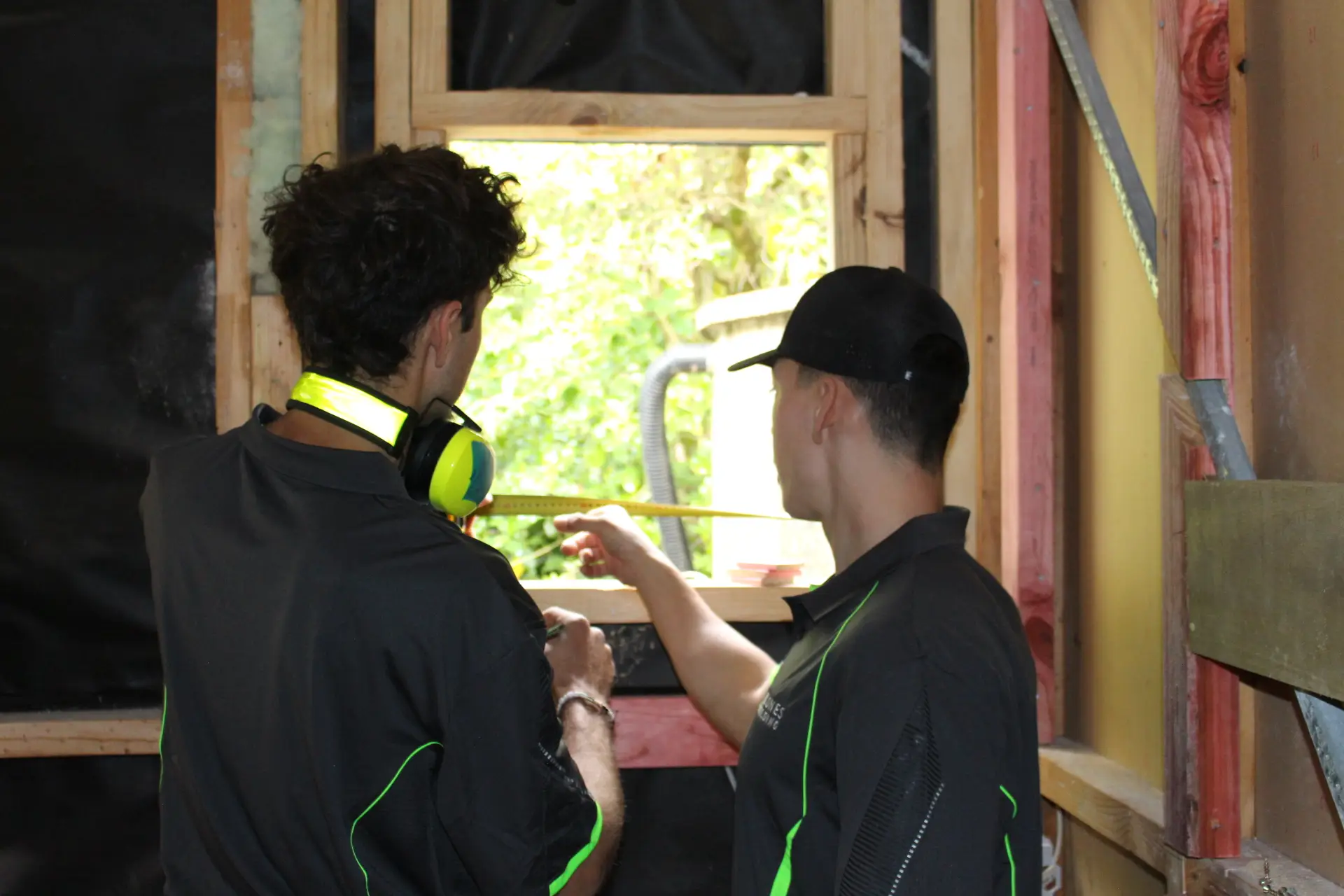
Our team at work — every detail considered, every system built to perform for the long term.
Why I Care About Healthy Homes
Growing up, I lived in a home that wasn't performing well. We had no insulation, single glazed windows, musty carpet and very little ventilation. Dad was a builder, but that meant he was always exhausted and stressed trying to make ends meet — and the idea of a high-performing home simply wasn't on anyone's radar back then.
I can still remember waking up with a blocked nose, battling asthma and hay fever and struggling to stay awake in class. Our home was uncomfortable, damp and cold, and looking back, it definitely played a role in our health and wellbeing as a family.
Family Health Tip
A warm, dry home supports better sleep, stronger immunity and fewer asthma triggers for tamariki. Those early years made a real impact on me. When I became a builder myself, I knew I wanted to focus on something more than just making homes look good.
Today, my mission is simple: build homes that support your health, improve your comfort and elevate how you live every day.
Small Changes That Make a Big Difference
Performance upgrades don't always have to be a full renovation. Even targeted improvements can have a significant impact on how your home feels day to day:
Quick Performance Wins
Better extractor fans = instant moisture control
Air purifier = cleaner, healthier indoor air
Run the dehumidifier frequently = less humid air
Interior insulation = less noise and more warmth
Retrofitted double glazing = better thermal performance at sensible cost
New seals on windows and doors = fewer drafts
LED lighting and efficient appliances = lower energy use
Frequently Asked Questions
Comfort is a feeling; performance is what creates it consistently. A high-performing home uses less energy to stay warm, manages moisture without dehumidifiers running constantly, and maintains healthy indoor air quality year-round — not just when the heating is cranked up.
Absolutely. Retrofitting insulation, upgrading to double glazing, improving ventilation and sealing the building envelope are all achievable in existing homes — especially when walls are already open during a renovation. The key is working with a builder who knows how to sequence these improvements correctly.
Some performance upgrades carry a higher upfront cost, but the long-term savings in energy bills, reduced maintenance and fewer health-related issues almost always outweigh the initial investment. Building to a higher standard today also protects your home's value as building codes continue to tighten around energy use and moisture management.
Waiheke's salt air, coastal humidity and weather extremes put extra demand on materials and building systems. A home built without considering these conditions will deteriorate faster and perform worse. Choosing durable, moisture-resistant materials and designing for natural ventilation and airflow is especially important on the island.
Common signs include cold or damp rooms, condensation on windows, musty smells, high heating bills, and recurring mould. A professional assessment before you begin is the best way to identify what's underperforming and prioritise upgrades for maximum impact. We can also take indoor air samples and send them to a certified lab to check for hidden contaminants.
Final Thoughts
A great renovation isn't just about what you can see. It's about how your home supports your lifestyle and wellbeing — from the quality of air you breathe, to the warmth you feel on a winter morning, to the energy bills you don't dread opening.
Performance and good design are not in conflict. In fact, a home built to perform well is almost always more beautiful to live in — quieter, more comfortable, more resilient, and more aligned with the natural environment around it.
If you're planning a renovation on Waiheke or in the Auckland region, we'd love to help you create a home that feels good to live in, performs well year-round, supports better health for your family and reduces environmental impact.